
⚓ The Anchored Widow
Dating after loss
5 Ways I Tried to Date After My Husband Died
The last time I was single it was 1996, and there was a landline involved. Here is everything I tried, what each one was good for, and the only one that worked.
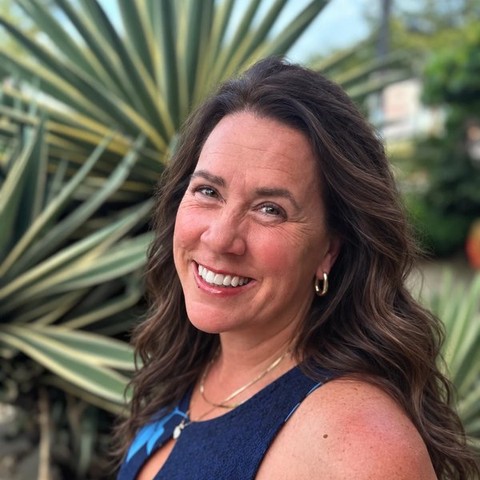
By Brooke Baird
Founder, The Anchored Widow
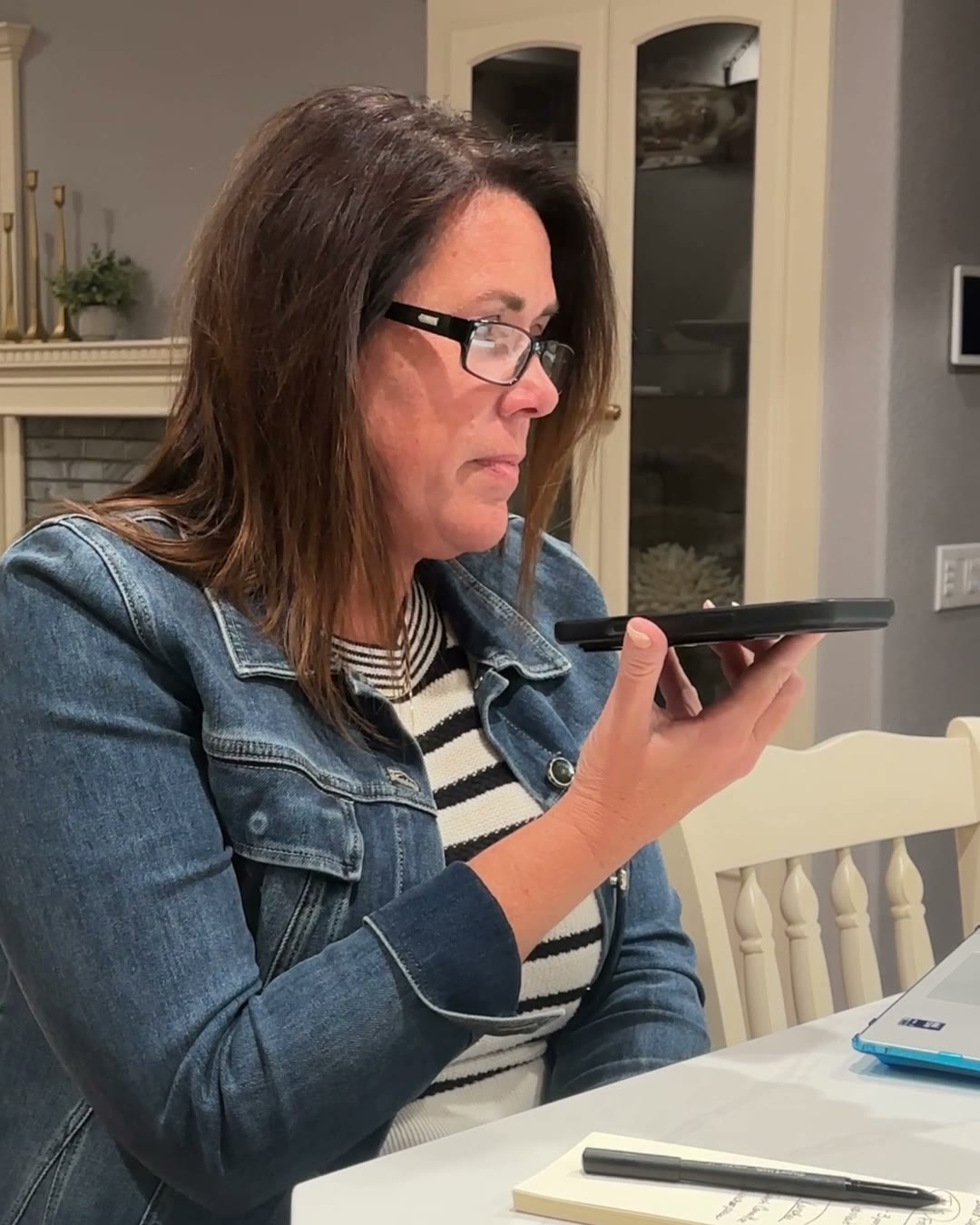
Nobody warned me that dating again wouldn’t feel exciting.
It felt like I was betraying him. Like cheating on a dead man I still loved.
That was September 2021, about a year after my husband Tom died. I was the woman sitting in the driveway. I was the one who froze when he asked about my husband.
My friends were the ones who encouraged me. They said I needed to date, if only to get back around people. They were right. I’m an extrovert, and grief was turning me into a hermit. I was carrying shame that existed only in my head. I had become the widow who was always crying. The third wheel at every table. My weekends belonged to family who weren’t dealing with their own grief.
So I went looking. I had no plan. I had a rulebook from 1996 and a nervous system that had read the entire terms and conditions of love.
If dating after loss has felt impossible, it isn’t because you forgot how. It’s because no one prepared you for this. No one prepared me either.
Here is what I tried.
Already know you want the words? The Widow Dating Playbook is here.
1. Three dating apps. At the same time.
Good forThe men are in there, and you can look for them from the couch in a robe.
What it cost meIt was nearly a full-time job. Three inboxes. I have an MBA, and none of it covered this much admin. No salary. No benefits. And every conversation was an interview for a position I wasn’t even sure I wanted filled. I’ve called dating apps at our age dumpster diving in a hazmat suit, and I stand by it. But the real problem was simpler. Nothing in an app tells you what to write back, or which man is worth a Saturday.
2. Friends who knew a guy.
Good forHe comes with a reference. Someone who loves you has at least met him.
What it cost meMixed results. Nothing made it past a first date, and that was mostly my call. There wasn’t enough in common to keep going. A friend can vouch that he’s a decent man. She can’t tell you whether he’s yours.
3. Going out alone.
Good forI ate dinner by myself. I went to church solo. It was awkward at first, and then some days I liked it. Time to think. No conversation to carry. Nobody to be polite to when I didn’t feel like it.
What it cost meOther days, every couple in the room was a reminder that I was a statistic now. Sometimes I was sure the table in the corner was talking about me, writing their own story about why I was alone. They were probably talking about the bread. It didn’t build my confidence. It fed the loneliness.
4. Dating gurus on YouTube.
Good forIt’s free, it’s there whenever you can’t sleep, and on the surface the advice is good.
What it cost meGurus deal in generalities. Generalities with a ring light. Big groups of women. A lot about what men want, and not much about what I wanted or what I didn’t. Not one of them could tell me how to bring up a dead man without the conversation losing its momentum. I didn’t have divorce baggage, and in the beginning I didn’t want to hear about his. I wanted a small connection that didn’t start with a bad story from either of us.
5. I overhauled myself. This is the one that worked.
I was very overweight, so I hired a trainer, cut the calories, and went to a doctor. I was already seeing a grief counselor. I added a psychotherapist and started building my emotional strength.
And I started acting like I was a catch instead of a depressed widow.
That sounds like a mood. It was a decision.
It cost me something too. A new kind of grief, the kind widows don’t discuss.
It has a name. Secondary loss. The first loss was Tom. The second came from close friends and family, and it was just as hard to process.
They wanted the best for me, and I didn’t want to hurt them. But how do you tell the people who love you that the woman they loved doesn’t exist anymore?
I had to figure out the new me. I had to figure out my new life, and how to rebuild a life I never thought I’d lose this soon.
They didn’t understand. My own family treated me differently, and they couldn’t see the path I had to walk. The opinions. The judgment. The tears and the shaking heads. All of it was the price of wanting to live on terms I could choose.
When you change, the people who liked the old version panic.
I paid it anyway.
What none of them gave me
Dating stopped being so hard once I’d done enough of it to understand myself and where I needed to go. I made many mistakes. I learned from them, and I didn’t repeat them.
Looking back, none of the first four were bad ideas. The apps had men in them. My friends meant well. Every one of them could get me to a date. Not one of them told me what to do once I was on it. What to write back. How to bring up Tom.
Number five rebuilt me. It did not tell me what to type to a man who opened with “hey 😉”.
Here is what was happening, and it was never a character flaw. Grief recalibrates the instrument. Your nervous system, your gut, your patience: all of it gets rewired. What I used to call overthinking turned out to be data. It’s not bitterness. It’s bandwidth.
You’re not broken. You’re more aware.
What I’d look for now
If I were starting over, this is what I’d want from any dating help, no matter who wrote it.
- Written by someone who has buried a husband. Most dating advice is written for divorce, and it assumes the last man was the problem. Mine wasn’t the problem. Mine died.
- Usable in the moment. Knowing what to do is no help when you’re frozen in your driveway. You need something you can pull up before you reply, in the restroom mid-date, and on the drive home.
- Actual words, not pep talks. “Get back on the horse” is not an instruction. I am not a horse.
- It lets you stay yourself. Performing is how you end up on a third date with a man you don’t even like.
- Short. Decision fatigue is a physical response, not a character flaw. Nobody living in it is reading 300 pages.
So I wrote it
I couldn’t find that, so I built it. It’s called The Widow Dating Playbook. You should know it’s mine, and I earn money when you buy it.
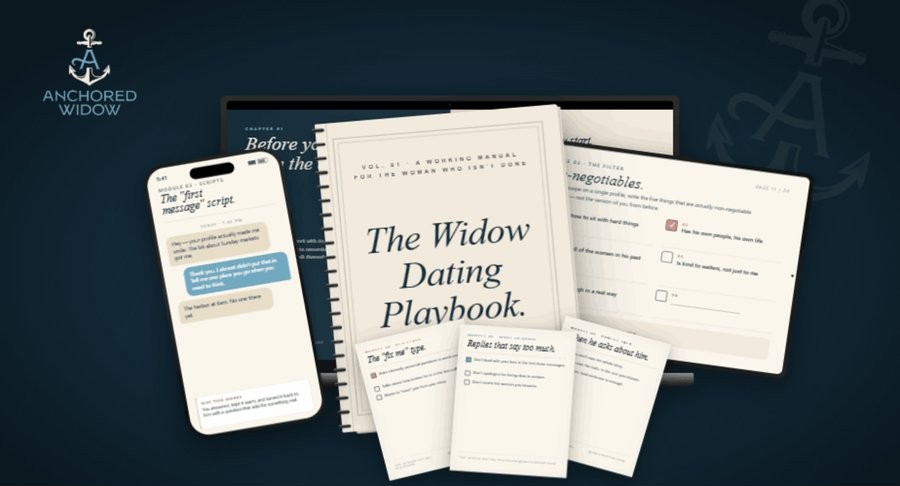
It’s 24 pages in seven sections. It’s a working manual, the kind you screenshot before a first date. Inside:
- Six copy-and-paste first messages and replies, plus three rules that save you weeks.
- Three ways to say “I’m a widow” (Light, Direct, and Boundary), and what to watch for after you say it.
- 13 translations of what he says versus what he means.
- Eight loud red flags, four quiet ones, and the green flags for balance.
- Five first-date questions better than “so what do you do?” and six exit lines for when you know in thirty minutes.
- The five-question drive-home filter.
It’s $27, one time, and it downloads as a PDF the minute you buy. All sales are final, so look through the full contents first. The first 100 buyers also get the Widow Red Flag Checklist free.
It’s a guide, not a guarantee. It isn’t therapy and it isn’t a grief resource. It won’t find you a man. It will give you the words.
From early readers:
“I used the widow conversation script and he responded perfectly. I didn’t freeze for the first time.”
Dina · Chicago
“It’s the advice I’d get from my closest friends, except they have no idea what I’ve been through, so they can’t relate.”
Shelly · Phoenix
The seat next to you is yours whether or not anyone earns it.
But if you’ve reopened the door, even slightly, every date you walk into without the words ends the same way: a drive home, replaying what you said. I’ve done that drive. I don’t recommend it.
Stay anchored.
— Brooke
Brooke Baird wrote and sells The Widow Dating Playbook. This page is her own experience and is not therapy, medical advice, or a guarantee of any result. This site is not part of the Facebook website or Meta Platforms, Inc., and is not endorsed by Meta in any way.